
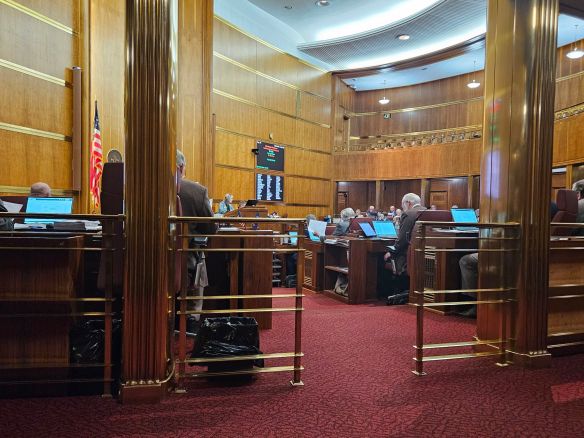
As we have now made it halfway through the 2025 legislative session much of the smoke and noise has gone away and we have a slightly better understanding of what Legislators are thinking when it comes to property tax relief and restrictions. As you might remember we started the session with 60 different bills dealing with property taxes, but we are now down to just a handful. View a summary of the property tax proposals here.

The remaining bills vary in how they deliver relief from providing a primary residence credit (HB 1176), to buying down school mills (HB 1168) and reducing tax rates (HB 1575). All three of these bills restrict local government’s ability to raise taxes. At this point, it seems bills that limit property values (HB 1575 & HB 1534) are not gaining much traction in the Senate but bills that provide either a property tax credit for primary residence and/or property tax “buydown” for school mills are gaining support.
Two of the bills will be heard this week. HB 1168 and HB 1575 will both be heard Tuesday. HB 1176 was previously scheduled for Monday morning but has been cancelled over the weekend. We predict HB 1176 will be heard the week of March 17th. HB 1176 & HB 1575 contain significant tax relief at $500 million and $703 million. All three bills contain limitations to local budgets. In other words……CAPS. The legislature has been solidly in the 3% camp so far. Exemptions to the 3% are provided in these bills but they are not all the same.
Although we believe the legislature will ultimately regret going down the cap road it appears CAPS are on their way. Because of the strong position of the legislature to restrict local spending, the strategy has now shifted to asking for lawmakers to lighten the cap to avoid severe consequences of diminished local services. Click here to view the list of what a 3% cap on levies means for each county.
Ath the direction of the ND County Commission Association legislative call, NDACo will be supporting any bill that provides relief for taxpayers. However, we are going to suggest that a flat 3% is not the way to go and instead they should consider an indexed cap based on the Consumer Price Index (CPI) + 2% to account for high inflation years like we all just recently experienced. We would also acknowledge there still would have to be an overall cap in this scenario so we are suggesting we would not go higher then 6% nor could we go lower than 2% in craze inflation or deflation times respectively.
These are tough decisions, and taxation policy is not easy. The chairman indicated they will hear all these bills before acting on them. It is unknown if they will work to merge some of the concepts into one bill or choice one to recommend passage. Regardless, we encourage you to review the bills and reach out to your legislators to let them know your thoughts. Now is the time!
Click here to view the schedule of bills NDACo is tracking for March 10-14.
*iMPORTANT: hb1176 appears on schedule but it has been cancelled
 North Dakota Counties Legislative Blog