Weekly Report for Week of January 27-31st

Click here for a view of the schedule of hearings for the week of February 3rd. New features on the NDACo website make it easy to find the schedule of NDACo bills. The schedule is updated daily – and is available to download and print. The website also includes a list of bills NDACo is tracking. Click here to check it out.

Property Tax Relief & Reform Related

The House Finance & Tax Committee heard several additional property tax relief and reform bills that varied in methods of tackling this complex issue. Here is a list of many of the bills heard:

  • HB 1289 – Partial property tax exemption for providing in-home care – FAILED
  • HB 1474 – Evaluates property taxes based on square footage
  • HB 1586 – Increases primary residence credit to $5000, eliminates foreclosures on delinquent taxes
  • HB 1559 – Shifts the definition of taxable valuation from a direct percentage of the current year’s true and full to a rolling average of three years
  • HB 1560 – Tax exemption for those who live in home longer than 30 years.
  • HB 1534 – 3% cap on assessed values for taxing purposes, allows for vote to override
  • HB 1575 – Reduces tax rate for residential, ag & commercial for North Dakota residents only
  • HB 1572 – Eliminates taxing authority for garrison diversion & NDSU extension, includes financial reporting & changes to tax statements
  • HB 1552 – Home rule sales tax capped at 3%. FAILED
  • SB 2298 – Homestead tax credit for all primary owners on first $200,000 of true & value
  • SB 2301 – Change income threshold for homestead tax credit to be connected to percentage of poverty level
  • HB 1353 – Property Taxes capped at CPI not to exceed 3%.

The committee is hanging onto the property tax related bills to work on together. It is unsure what approach they may take – if they will keep the bills whole or mesh together concepts from multiple bills or if they will separate relief and reform issues and deal with them separately. The committee has work time scheduled at 2:00 Monday-Wednesday. We expect them to tackle these bills, or at least some of them this coming week.

One of the first property tax related bills to cross-over will be heard this week is SB 2201 – which relates to the primary residence credit and homes owned in trusts. The bill would allow for those to now be eligible for the PRC. The bill also includes a retroactive clause. That hearing is Monday morning. The bill carries an emergency clause, so it can go into effect as soon as the Governor would sign it.

Other bills of importance that were heard or acted on:

  • HB 1141 – Prohibits state or political subs from using public funds to endorse organizations, candidates or ballot measures
  • HB 1344 – Clarifies NDDOCR pays counties for housing state sentenced inmates when NDDOCR is over capacity
  • HB 1341 – Assaulting a hospital worker is a Class C Felony – DP recommendation
  • HB 1419 – Includes 911 dispatchers & ems into NDPERS public safety plan
  • SB 2277 – Hwy 200 would be known and signed as ND Fallen Peace Officers Highway – Do Pass recommendation
  • HCR 3006 – Resolution urging improvement of USPS
  • HB 1384 – Required auditors to be elected – FAILED
  • HB 1380 – Repeal publication requirement for commission minutes – FAILED
  • HB 1171 – Provide scholarships to family of law enforcement – FAILED
  • HB 1407 – Increase weight limits on roads – FAILED
  • HB 1361 – Mandatory Min sentence for human trafficking – PASSED
  • HB 1312 – Election of Parks & School Board moved to General – FAILED
  • SB 2178 – Multiple ballots in Primary Election – FAILED

The House will be holding floor sessions at least two nights this week, maybe three. This is in response to the record number of bills that have now been introduced. For the first time in 15 years, the number of bills has surpassed the 1,000 mark. NDACo typically tracks about 60% of the bills filed.

Law enforcement & corrections will be watching HB 1193 which is expected to be voted on the House floor Monday or Tuesday. This bill would provide an appreciation grant to officers. It came out of committee with a Do Not Pass recommendation.

What to watch this week – Feb 3rd-7th

      • SB 2365 – Requires state to reimburse 24/7 fees if Judge waives
      • HB 1613 – Restricts law enforcement use of drones & robots
      • SB 2397 – Extends prairie dog funds to smaller oil counties
      • HB 1382 – Increases gas tax 3 cents for road infrastructure – cities, counties, townships
      • HB 1307 – Home rule can’t supersede state law
      • HB 1588 & 1350 – related to possession of firearms
      • HB 1587 – Election related – would require hand count post-election audit

      Weekly Report for Week of Jan 20-24th

      Click here for a view of the schedule of hearings for the week of January 27th. New features on the NDACo website make it easy to find the schedule of NDACo bills. The schedule is updated daily – and is available to download and print. The website also includes a list of bills NDACo is tracking. Click here to check it out.


      A couple more property tax related bills were heard last week, but many more will be heard this week in House Finance & Tax. We encourage you to listen in on the committee hearings.

      There were several commissioners, auditors and sheriffs at the Capitol Thursday testifying on numerous bills impacting elections and law enforcement\jails.

      • HB 1193 is $8.4 m for a $6,000 appreciation bonus to state and local peace officers and correctional officers. This proposal is similar to the “Back the Blue” grants approved last session but dedicates the bonus to those who have been in the department/agency for 4 or more years.
      • HB 1197 & HB 1213 have been introduced to provide state financial support to counties making jail improvements, expansions or new builds. There are currently five counties looking at jail expansions or new construction. HB 1197 creates a jail improvement fund with $50 million. HB 1213 would provide a low interest loan to counties for jail improvements.

      Several election bills were also heard:

      • HB 1287 would establish voter registration. County auditors joined the Secretary of State’s Office in opposition.
      • SB 2178 required separate ballots for each party for the primary election. This bill was voted on and failed in the Senate Friday.
      • HB 1384 sought to require county auditors to be elected. The committee gave the bill a Do Not Pass recommendation.

      HB 1380 would give counties the option to put commission meeting minutes on the county website instead of printing in the paper. This is one of the greatest publication costs to counties. The committee gave the bill a Do Not Pass recommendation.

      HB 1407 proposes to increase the weight limit allowed on roads. NDACo opposed this bill citing the great needs for roads currently and the costs associated with having roads and bridges re-evaluated for a higher weight limit. The committee gave the bill a Do Not Pass Recommendation.

      HB1413 creating a safe food donation program received a DNP from the Ag Committee this afternoon at Rep Bahl’s request.  After further information, he determined the bill wasn’t needed as there are already systems in place and this bill isn’t needed.

      The Senate passed SB 2039 that gives property tax exemption to agriculture storage facilities. It has been the position of NDACo to oppose expanding property tax exemptions as they only shift the property taxes to other property taxpayers. The bill now goes to the House.

      Don’t forget to register for the upcoming Local Government Capitol Connection Feb. 18-19th at the Bismarck Event Center. NDACo is partnering with other associations representing cities, townships, schools and parks to bring all local political sub leaders together for legislative updates. Click here for more information.
      Lawmakers Hear First Two Property Tax Relief / Reform Bills

      Click here for a view of the schedule of hearings for the week of January 20th. New features on the NDACo website make it easy to find the schedule of NDACo bills. The schedule is updated daily – and is available to download and print. The website also includes a list of bills NDACo is tracking. Click here to check it out.
      Tip: A great page to bookmark to review during the session.

      Property Tax Related

      How the Legislature will proceed with property tax relief and reform is the topic of conversation with nearly every lawmaker. During this first full week of hearings, two concepts were presented to the House Finance & Tax Committee.

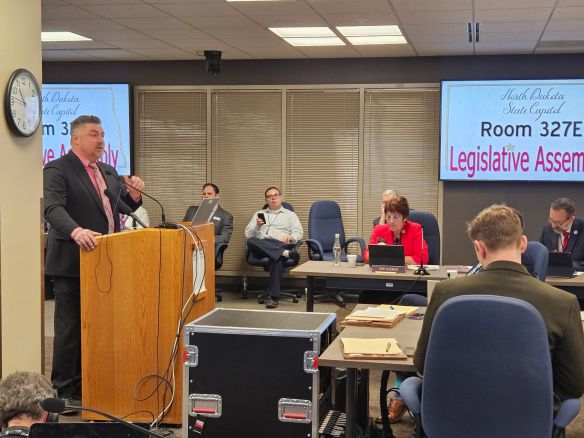
      HB 1176 is the property tax relief/reform bill that Governor Armstrong is backing, sponsored by Rep. Mike Nathe. The bill was heard Tuesday. The basis of this plan is to increase the Primary Resident Credit from $500 to $1550 using General Fund and Legacy Earnings. The bill includes a 3% cap above base year dollars levied, allows for carry-over of unused cap dollars for up to five years. Political Subdivisions can exceed the cap with a vote, but it is only good for 1 year. The plan also makes changes to the homestead tax credit – increasing the income thresholds and increases the renters refund – to allow for more individuals to be eligible. NDACo & ND League of Cities supported the relief the bill provides to citizens but voiced concerns regarding the 3% cap. NDACo Executive Director Aaron Birst described how the 3% cap will have different effects on counties depending on size, tax base and lack of other available funding sources.

      HB1168 “buys out” 60 mills of General Fund levy authority for schools, caps political subdivision levies at 3% above base year dollars levied, requires a super majority vote to exceed cap and the vote is good for 5 years. This bill was heard Wednesday and is sponsored by Rep. Scott Louser.

      The committee didn’t take action on either bill. NDACo is willing to work with lawmakers on all viable solutions for a tax relief and reform package. We encourage county officials to communicate with your legislators on this issue and provide them information on how a cap (3%) would impact services and hamper the ability to address emergency situations, growth, or other issues that arise.

      Governor Armstrong Budget

      Governor Kelly Armstrong presented his budget to the joint House and Senate Appropriations Committees. There are several county-related areas to highlight.

      • $483.4 million for property tax relief
      • $464 million in bonding for construction projects to include: new State Hospital, Airport projects,
      • $16 million to staff and operate a new expansion of the Grand Forks County Correctional Center as an immediate, temporary solution to prison overcrowding.
      • $40 million to plan for Missouri River Correctional Facility improvement/expansion and $36.5 million to finish the Heart River Correctional Facility for women.
      • $19 million for behavioral health programs
      • Reduced the ND DOT budget proposed increase by $109 million and adding a new Legacy Fund earnings stream for the Legacy Earnings Highway Distribution Fund.

      Transportation Related

      • SB 2142: Was heard Friday, it creates a new fund that would receive 25% of motor vehicle excise tax to be allocated to townships in non-oil producing counties. Currently, 50% of motor vehicle excise tax is deposited to the general fund and 50% goes to the Flexible Transportation Fund. The amended language would eliminate the deposit to the General Fund and deposit 25% to the new Township Road and Bridge Sustainability fund and 75% to the Flexible Transportation Fund. NDACo supported the concept of the MV Excise Tax being dedicated to roads but also asked for consideration that counties could also be factored in. 25% of the MV Excise tax is estimated to be $86 million.
      • HB 1065:  The distribution of funds for townships in non-oil producing counties will be calculated by certified road miles rather than a flat fee.  The bill passed the House 90-3.
      • HB 1051:  Added Tribal governments to allow requests for funds from the Special Road Fund.  Passed House 91-0
      • HB 1052:  NDDOT bill for regulation of tourist oriented directional signs to include rural highways not within the ROW of interstate highway systems.  The bill failed in the House 1-92
      • HB 1053:  The NDDOT amended the definition of the state highway system may not exceed 7,700 miles (removed the percentage of road miles calculation). Passed the House 93-0

      Other bills of interest with action this past week:

      • SB 2039: Property Tax Exemption for Ag Storage Facilities – NDACo opposed
      • HB 1134: Criminalizes the dissemination of personal information – NDACo requested amendment for Law Enforcement related information.
      • SB 2145: Immunity for 911, 211, 988 operators
      • HB 1060: Extends presumption clause to State Correctional Officers – NDACo requested bill be amended to include all correctional officers (local & regional jails).
      • SB 2098: Changes criteria for issuing Blue & Silver alerts
      • HCR 3003: Require 60% voter approval for constitutional measures
      • HB 1096: Committee amended 911 service fee from 5% to 2.5% – Passed House 89-0

      Bills we are watching this week (1/20-24) worth noting (refer to schedule for links to bills)

      • SB 2096: Funding for acute psychiatric treatment
      • SB 2201: Primary Residence credit for homes in trusts
      • SB 2166: Creates Property Tax Portal
      • HB 1266: Disabled Veterans Credit
      • SB 2128: Attorney General’s Truth in Sentencing Bill
      • HB 1335: Homestead Tax Credit increases
      • HB 1390: Property Tax Relief bill
      • HB 1383: Property Tax exemption for inundated ag land
      • HB 1337: Grants to Counties for mental health treatment in jails
      • HB 1193: Back the Blue Grants
      • SB 2183: Increases speeding fine in construction areas
      • HB 1287: Establishes voter registration
      • SB 2175: Post-Election audits
      • SB 2178: Creates multiple ballot styles for primary
      • HB 1197: Creates new jail improvement fund
      • HB 1213: Low interest loans for jail improvements
      • HB 1407: Increases road weight limits
      • HB 1380: County publication requirement
      • HB 1384: Requires County Auditors to be Elected

      New Features To Track Legislative Session

      NDACo has added a couple new features to the blog to help you stay involved in the Legislative Session. You can view the list of bills NDACo is tracking and see the hearing schedule of those county identified bills. Both these lists automatically update, so you can check them often. There is a link by the hearing schedule that will allow you to download or print the schedule. It may be a good idea to bookmark the hearing schedule link as this will change daily.

      You can access these resources a few ways:

      NDACo Website: On the home page of the NDACo website, along the top green menu bar, look for the Click Here to See our New Bill and Schedule Tracking Tools

      NDACo Legislative Blog: On the top menu bar on this site, click on the NDACo Legislative Hearing Schedule & Bill Tracking – which takes you to the NDACo website page. These items are also linked on the side menu of the Blog. It may also be a good idea to bookmark the hearing schedule as it will be updated daily.

      Now onto the report….

      It was an extremely busy week with the reading of bills and visiting with lawmakers about potential bills. There are about 396 bills that are out there but we expect that to grow greatly throughout the week so we will be working to get eyes on all the bills to determine if they relate to counties and how.

      There were a couple hearings of interest this week. HB 1065 would change how prairie dog funds for townships are distributed – from an equal amount to based on miles. HB 1096 reduces the communication service fee to 1% allowing a greater % to be retained for the 9-1-1 system. SB 2093 expands the income tax deduction for retired Law Enforcement to surviving spouses.

      This week… Two major property tax relief / reform proposals will have hearings. HB 1176 is Tuesday at 9 am in House Tax. This is the proposal Governor Armstrong pitched during his State of the State Address that includes a $1550 primary residence credit starting in 2025. It also expands the homestead tax credit. It includes levy limits of 3% and allows for a carry-over of unused % for up to 5 years. It does allow for a vote to go above the 3% cap – but only for one year. The other property tax bill is HB 1168 and proposes to send the relief through school funding formula. That bill also includes a 3% cap. That will be heard Wednesday at 9 am in House Finance & Tax. These hearings like all of the legislative hearings are live streamed and recorded. You can find them on the Legislative Council’s website www.legis.nd.gov

      The other major event this week will be Gov. Armstrong providing his Budget to a joint House and Senate Appropriations hearing Tuesday at 9:30.

      Property Taxes Relief & Reform Highlighted in State of State Address

      The Legislative Session kicked off today with Governor Kelly Armstrong delivering his first State of the State Address. The 34th Governor told lawmakers real property tax relief and reform must be the number one priority on the Legislature’s agenda. He called for delivering the most significant plan possible that can be both aggressive and durable.

      Governor Armstrong provided some insight into what a plan should include:

      • Increase the existing Primary Residency Credit from $500 to $1,000 per year at a cost of about $310 million for the 2025-27 biennium.
      • Provide an additional $550 per primary residence credit by using a dedicated stream of the Legacy Fund earnings at a cost of $173 million next biennium.
      • The total combined primary residence relief would be up to $1550 per year in 2025-27.
      • Expansion of Homestead Tax Credit
      • Armstrong didn’t get into the details but did indicate the plan would include reform by capping future increases in local budgets at 3% and allowing for a carry-over of unused cap.

      “We can afford it. The people of North Dakota are demanding it.” Armstrong said. “It creates Legacy Fund buy-in. And it is the single most impactful thing we can do for the citizens of North Dakota this session.”

      “Today Governor Armstrong announced a bold vision for all North Dakotans. Building a state that is the best in the country to live, work and raise a family is a vision shared by county officials across the state. We look forward to working with the governor and the legislature to find the best way to fund essential services that are delivered by local governments,” stated NDACo Executive Director Aaron Birst.

      While unofficial, we are hearing reports of there being 65 property tax bills being drafted. Governor Armstrong’s proposal is one of many that will be discussed.

      Committee hearings are being held on a number of pre-filed bills Wednesday-Friday. While we don’t have a county-related specific schedule of these hearings you can see the full schedule here:

      https://ndlegis.gov/sites/default/files/documents/housecommitteehearingreport.pdf: Property Taxes Relief & Reform Highlighted in State of State Address https://ndlegis.gov/sites/default/files/documents/senatecommitteehearingreport.pdf: Property Taxes Relief & Reform Highlighted in State of State Address

      69th Legislative Session Starts this Week

      The Legislative Session kicks off Tuesday with several speeches to set the stage. Tribal-State Relationship at 10; State of Judiciary at 11; followed by Governor Kelly Armstrong’s State of the State Address at 1. You can watch all speeches live on the ND Legislative website. Make sure to bookmark http://www.ndlegis.gov that is where you can watch all bill hearings and floor sessions along with find information on how to contact your legislator and bill and schedule information. We encourage you to be involved!

      NDACo will use this blog site to post weekly reports and upcoming hearing schedules for county-related bills. Make sure you are subscribed to receive updates when the blog is updated.

      Below is a look at the leadership and committees for the 69th Legislative Session. Let the important work begin!

      County Focused Election Summary

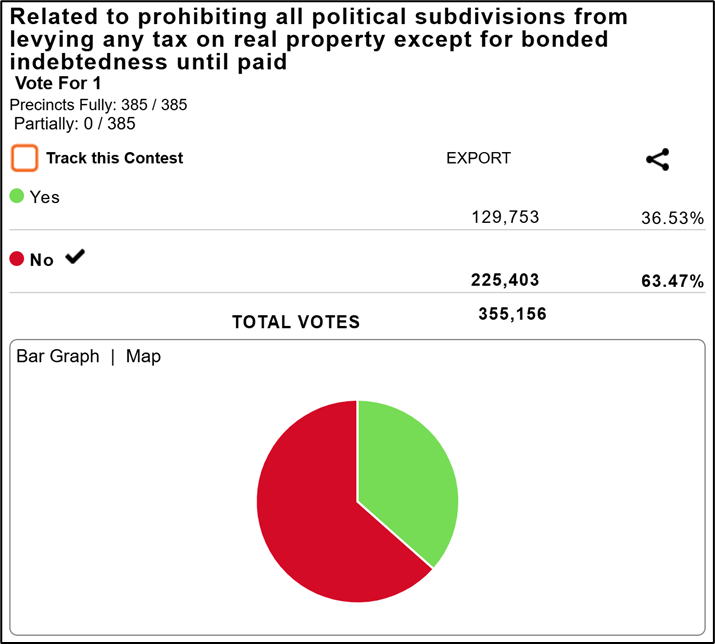
      The General Election proved to be successful for North Dakota Counties with the defeat of Measure 4. 63% of voters were opposed to the measure to eliminate property taxes. A county-by-county analysis shows that the No vote was in the majority in all 53 counties, in some counties the No vote was as high as 75%.

      “It was apparent during the campaign that North Dakotans are frustrated with property taxes but the defeat of Measure 4 signals that North Dakotans realize that proposal was not the answer,” said NDACo Executive Director Aaron Birst. “The failure of Measure 4 also indicates that ultimately citizens trust their local government to make budget decisions rather than the Legislature.”

      NDACo joined the Keep It Local Coalition after NDACo members passed a resolution to oppose efforts to eliminate property taxes. Several other county member associations also joined in the efforts to inform voters about the importance of property taxes in funding local services.

      “Many county members spent their own time to meet and inform North Dakota citizens about their concerns on Measure 4. Those efforts paid off. Thank you to all the county officials who used their voice to inform voters,” said Birst.

      Property tax relief will be a top priority for the Legislature to address in the 2025 Session. It is certain legislators will bring forward various concepts for providing further relief to citizens, but we also recognize that limitations on the level of increase will also be part of the conversation. In a news conference the day after the Election, Governor-Elect Kelly Armstrong said property tax relief will be his number one priority and finding a level that is sustainable long-term is critical.

      Voters also rejected Measure 5, to legalize marijuana, but more narrowly. The measure was defeated with a vote of 53% No to 47% Yes.  This is the third attempt to get voters to legalize marijuana. Previous measures were on the ballot in 2022 and 2018.

      North Dakotans approved reducing how much Legacy Fund principal lawmakers can spend from 15% to 5%. Voters defeated the measure that required constitutional measures to be approved in two elections and to be one subject only.

      County Measurers & Races

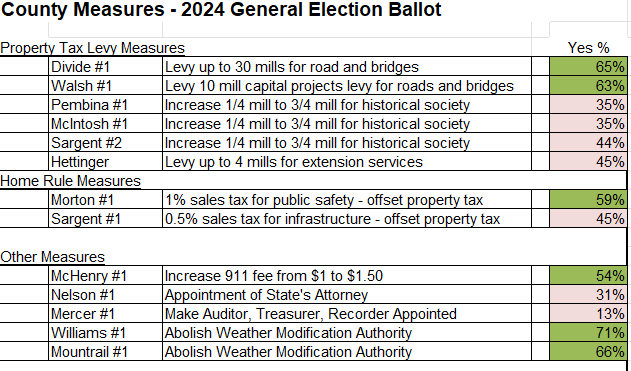
      County Measures were more mixed. Divide and Walsh counties had measures to increase taxes for roads and bridges which passed with more than 60% support. Three counties had proposals to increase taxes for historical society and one with an increase for extension; those measures failed. Two counties proposed a sales tax increase to offset property taxes. A 1% sales tax increase in Morton County was approved to be dedicated to public safety. However, a .5% sales tax for infrastructure in Sargent County was defeated. McHenry County residents approved increasing the 911 fee to $1.50. Measures to allow counties to appoint officials failed in Nelson and Mercer. Voters in Williams and Mountrail approved abolishing Weather Modification Authority.

      There were many county races as well. 115 Commissioners were on the ballot with only 48 incumbents running unopposed. There were 39 newly elected commissioners.

      Legislative Races

      Republicans have retained supermajorities in both the North Dakota’s House and Senate. In the House, Republicans won 46 of the 51 available seats. 25 seats were up in the Senate, with Republicans winning 22 of the races.

      Voters Show Up

      A record number of North Dakotan’s cast their ballots before Election Day with 51% voting early or voting absentee. 62.5% of eligible voters cast 371,510 ballots. Election results are unofficial until county canvassing boards meet on November 18th and are certified by the State canvassing board on November 20th

      Who the Top Property Taxpayers are in ND

      The North Dakota Association of Counties conducted research on the top 3 property taxpayers in each county. The findings are very informative. Here’s a summary:

      • Of the 3 highest paying taxpayers in each county: Out-of-State companies pay 82% of the taxes.
      • 77% of the 3 highest paying taxpayers are out-of-state companies.
      • The 3 highest paying taxpayers in each county pay $90 million in taxes.
      • The highest 3 taxpayers pay as much as 35.5% of all taxes billed (Oliver) to less than 2% (Cass).

      Click to view a list of the Top 3 Taxpayers in each county

      These points highlight who the real winners are if property taxes are eliminated. The measure goes far beyond providing property tax relief to North Dakota homeowners. In fact, only 36% of property taxes come from residential properties. Homeowners pay $513 million a year in property taxes or 36% of the total.  Commercial and Centrally Assessed combined pay $459 million a year or 33% of the total. The other third of property taxes are paid by Agricultural, Special Assessments and Special Taxes. Bottom line, if the measure passes, big businesses – which a majority are out-of-state – will realize a tax break at the expense of North Dakota residents.

      Statewide, counties collect 23% of the total $1.4 billion in property taxes every year. Nearly half of those funds are dedicated to roads and bridges and law enforcement. In addition, counties on average cut property taxes 1.2% in 2022.

      New analysis also shows that from 2022 to 2023, 22 counties reduced their mill rate and eight of those counties also decreased the dollar amount levied. This is great news and illustrates how counties are being responsible with their budgeting and addressing the needs of their communities.

      Counties recognize the frustration many residents have with property taxes; however, they are necessary. Property taxes are controlled and spent where they are raised and fund vital services that benefit property owners. The Tax Foundation’s 2024 annual analysis of tax structures in the U.S. ranked North Dakota 7th best in property taxes. If the measure would pass, North Dakota would be the first state without property taxes. The estimated cost of this plan is $3.15 billion a biennium. That is half of the state’s general fund budget. This means lawmakers will more than likely cut other state programs, many that benefit local communities like state support for local roads, schools and senior programs.

      Measure 4 requires the state to fund local governments based on property taxes collected in 2024…forever. There is no plan for growth or inflation. No county can build and maintain roads at 2024 levels or operate the Sheriff’s Department five years from now at today’s cost. Same goes for any of the political subdivisions providing local services.

      There are many discussions occurring on how to further relief and reform. NDACo is willing to work together with legislators to find solutions that strike the right balance of allowing local control and funding local services, while addressing effective limits.

      NDACo has developed a package of resources for counties to use in education on property taxes. Click here to view the informational documents.

      ND Counties Reduce Property Taxes in 2022

      Tax policy is at the center of legislative discussions in preparation for the 2025 Session. The conversations are fueled by the potential property tax elimination measure and pressures to improve the tax system. Interim legislative committees recently met and discussed tax exemptions along with impacts of potential limitations on local political subdivision budgets and levies.

      In preparation, NDACo dove into county property tax data, which provides accurate information on the level of taxation, changes to those amounts and how counties are using those dollars. The total amount of property taxes levied in ND in 2022 was $1.4 billion with counties levying 23% of the total property taxes. 

      When looking at property values, the information isn’t separated out by taxing district but is representative of statewide values for all property classes. From 2019-2022 property values have increased 11% or an average of 3.6% each year.

      “Property values going up reflects growth, that’s a good thing. But when values increase because of growth and development so does the increase in need for services,” said NDACo Executive Director Aaron Birst. “Counties are very much opposed to capping any kind of value increases. It is our opinion that would be a disaster and cause inequities between homeowners that in the long haul, citizens would not appreciate. As you look for solutions, caps on valuations are not the way to go.”

      Just because values went up does not mean property tax and county budgets increased. Counties, on average since 2019, saw a 3% increase in growth. “What county folks don’t get credit for is that there were counties that reduced their budgets. In fact, from 2021 to 2022 counties saw a decrease of 1.2% in property taxes collected,” Birst explained. It’s also important to note that during that same time frame the Consumer Price Index grew from 4.7% to 8%.

      WHAT DO COUNTIES PAY FOR?

      One-third of county expenses are funded by property taxes. Nearly half of county expenditures are dedicated to roads and public safety.

      CITIZENS APPROVE MEASURES TO INCREASE TAXES

      Despite what many may think about North Dakotans’ view of property taxes, recent measures on the ballot to increase taxes to pay for specific local services illustrate that citizen’s support. In the 2022 and 2024 election cycles, there were 57 county measures on the ballot to approve additional or increasing levies. 52 of the 57 measures passed, that’s a 91% approval rating. This strongly signifies that if citizens believe the service benefits their community, they support it.

      PROPERTY TAX EXEMPTIONS

      NDACo was also asked to provide information on property exemptions. A survey was sent to all County Tax Directors, 52 out of the 53 counties responded. Throughout the state there are 25,000 parcels that are exempt from paying taxes. NDACo traditionally has opposed expanding property tax exemptions as these exemptions spread the tax burden to other taxpayers in the county.  Of note, the data shows nearly 60% of the exemptions are farm related.

      Other interesting findings are:

      • Cass County has the highest number of exempt parcels at 3,031
      • Renville County reported the fewest number of exempt parcels at 124 (121 are farm related)
      • New Construction/New Business exemptions account for 50% of total count in Cass County
      • 73% of Stutsman County’s exemptions are farm related
      • Walsh County reported the highest number of Charitable Organization exemptions

      Link to view the survey results HERE

      FURTHERING TAX RELIEF & POLICY CHANGES

      NDACo has been asked about caps to valuation along with limiting the growth of property taxes collected and budgets and what the impacts would be on counties. Birst explained that when considering caps as a potential mechanism, it’s realistic that most political subdivisions will take that percentage every year regardless of whether they need to or not because the next year is unknown. In addition, because counties are not equal in population, economic activity or budget, a percentage cap is going to impact counties differently. “Caps may not be the answer in satisfying those who are upset with property taxes,” said Birst.

      Leading up to the 2025 Legislative Session this discussion is sure to continue. There are many ideas and thoughts on potential tax relief and policy changes. NDACo has been involved in numerous discussions with legislators, other associations representing political subdivisions and the business community on these concepts. NDACo will continue to partner in these discussions to improve the system. 

      It’s also important to highlight the significant relief approved in the 2023 Legislative Session. Lawmakers approved a $500 property tax credit for primary residences, expanded the homestead tax credit by increasing eligibility for those 65 and older and reduced the state’s income tax. The Tax Foundation recently reported that North Dakota had the 7th lowest state-local tax burden in the nation in 2022.  

      Lawmakers Approve 14 Bills in Special Session

      North Dakota Legislators were called back to the capitol for a special session this week to address the 2023-2025 appropriations bill for the state Office of Management and Budget. The bill also included several items both appropriations and policy related. Governor Doug Burgum called the special session as a result of the North Dakota Supreme Court issuing a ruling finding the OMB budget bill unconstitutional, ruling it violated the state Constitution’s single-subject rule.

      Legislative Council developed 14 bills – seven appropriations and seven policy bills for introduction. Two committees, a joint appropriations and joint policy committee made up of both House and Senate members, heard the bills Monday and Tuesday and provided recommendations.

      In addition, the House, through a rare floor action, approved the introduction of a bill to expand income tax relief. House members passed the bill, however, the Senate defeated the proposal.

      The other issue that garnered the most discussion during the special session was the make up of the North Dakota Public Employees Retirement (NDPERS) board. That legislation is described below along with a summary of other bills of interest. The bills obviously included much more but highlighted below are items that were changed from the bill as it was passed in April and have county impact. More detailed information on the bills can be found here: https://ndlegis.gov/assembly/68-2023/special

      NDACo – 2023 Special Session Summary

      1547 – PERS Board Make Up

      Change: Increases PERS Board membership from 9 to 11 members.

      Board will include 4 Legislators (2 House & 2 Senate appointed by Majority Leaders), 4 “citizens” appointed by Governor (non-elected), 3 elected by employees. (increased from 2 to 4 legislators on board)

      Appointed positions are “at will” and can be replaced at any time by majority leader / Governor.

      Board Transition: All current appointed members are terminated; new board to take over 14 days after bill goes into law.

      1548 – PERS Transition Effective Date

      Change: Effective date amended so that PERS Board can approve transition from Defined Benefit to Defined Contribution when PERS is ready versus waiting until end of year.

      Ensure “best in class” options for existing and legacy employees and include annuity options.

      This would guarantee those in the DB plan have the same level of investment options as those in new DC plan.

      2393 – OMB Appropriation

      Change: Increased the amount Emergency Commission has authority to spend from $400,000 to $750,000 to be available for variety of needs that may arise.

      2394 – Snow Grant Extension

      Change: Provides an extension and additional funding for snow removal grants.

      $106,000 is appropriated to provide additional 2021-23 snow removal grants to local entities that did not receive a snow removal grant during the 21-23 biennium and submitted its application and required documentation to DES prior to 10/20/23.

      This will address some local entities who missed deadline but qualified for the grant.

      1543 – Facility-Related Grants Appropriation

      Includes $8,250,000 for behavioral health facility grant in western North Dakota (badlands human service center service region).

      Matching funds required and grant-receiving entity must operate facility for a period of at least ten years.

      New language added to allow for $6.4 million to be used to expand community services by transitioning to a Certified Community Behavioral Health Clinic if DHHS is unable to secure a grant recipient.

      2396 – Distribution of Controlled Substance

      A Felony for anyone who delivers controlled substance or supplies to be delivered or consumed and leads to death. Bill is aimed at addressing fentanyl overdose deaths.   

      1549 – Income Tax Relief

      House approved introduction of bill.

      $45.8 million to increase the bottom (zero) bracket. The expansion would allow for 50,000 additional taxpayers to pay 0%. Individuals with incomes $60,000 (single) & $100,000 (married) would fall in zero bracket.

      Passed House/ Failed Senate